
 The perfect crimson dahlia ‘Doris Day’, 2017 dahlia trials, Parham, West Sussex
I track down Parham Head Gardener, Tom Brown, in his office where he is carefully stowing away a fat pile of seed packets into a battle-worn filing cabinet. ‘Melon seeds’ he grins. The seeds have been brought back from Italy by the Barnard family, who live in this beautiful Elizabethan house in West Sussex, and one of the many challenges Tom will be cheerily taking on in the coming months will be to see how successfully he can get these new varieties of melon to grow.
Tom has invited me to Parham to see his 2017 Dahlia Trials. I am delighted to be returning to this atmospheric and constantly inventive garden (see my July 2016 post) and I am thrilled to have the chance at last, after four years of writing a blog called The Dahlia Papers, to consider this most uplifting plant.
I love pretty much everything about the dahlia. I love the sheer ballroom-dance-competition glee of each fluffier, more neatly sequinned variety:

 Gorgeous salmon pink and cream dahlia above and Dahlia ‘Karma Yin Yang’ below spotted at the Chelsea Flower Show
And I love the neat pompom and ball dahlias for the impossible regularity of of their daintily sculpted, rounded heads – here in polka dot form at the Great Dixter Autumn Plant Fair (7th and 8th October – go if you can!). 
There are single dahlias too, of subtle or dazzling shades, that can lift or add depth to a border over a long period in late summer. Dahlia ‘Poppy Scotland’ is a particularly clear bright red cultivar available as a rooted cutting from the National Dahlia Collection .
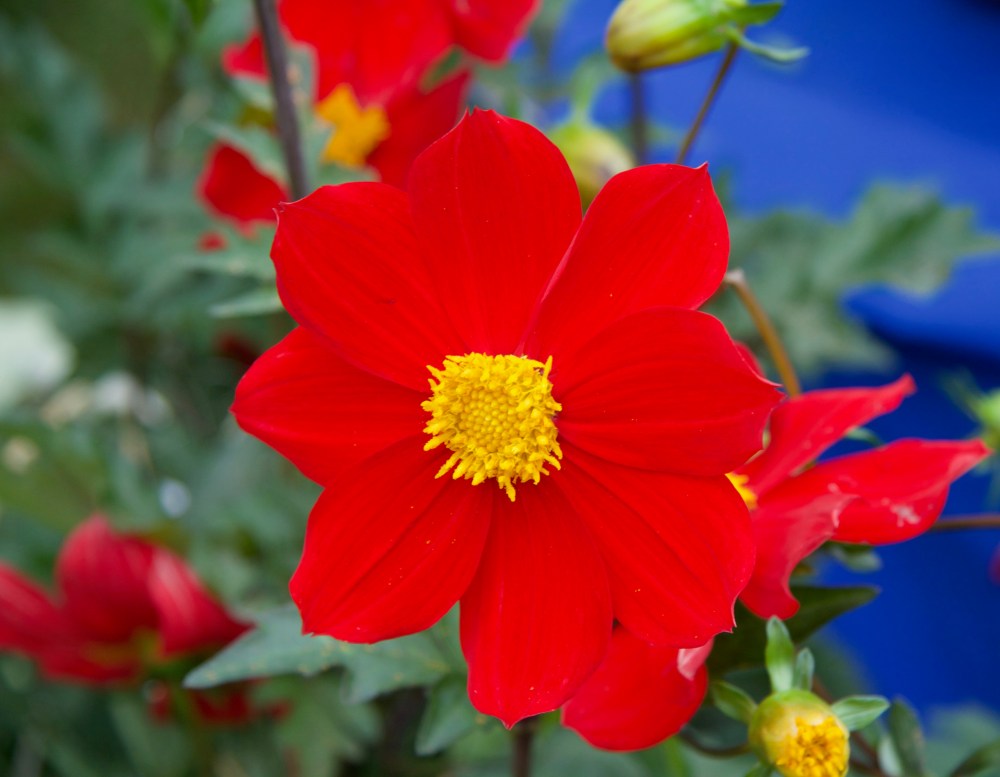 Dahlia ‘Poppy Scotland’
Dahlias have, of course, become fashionable again in recent times. As has my part of London, Peckham, where exquisitely wrapped English dahlias are available alongside equally exquisite flat breads, pears and cheeses at the lovely General Store in Bellenden Road.

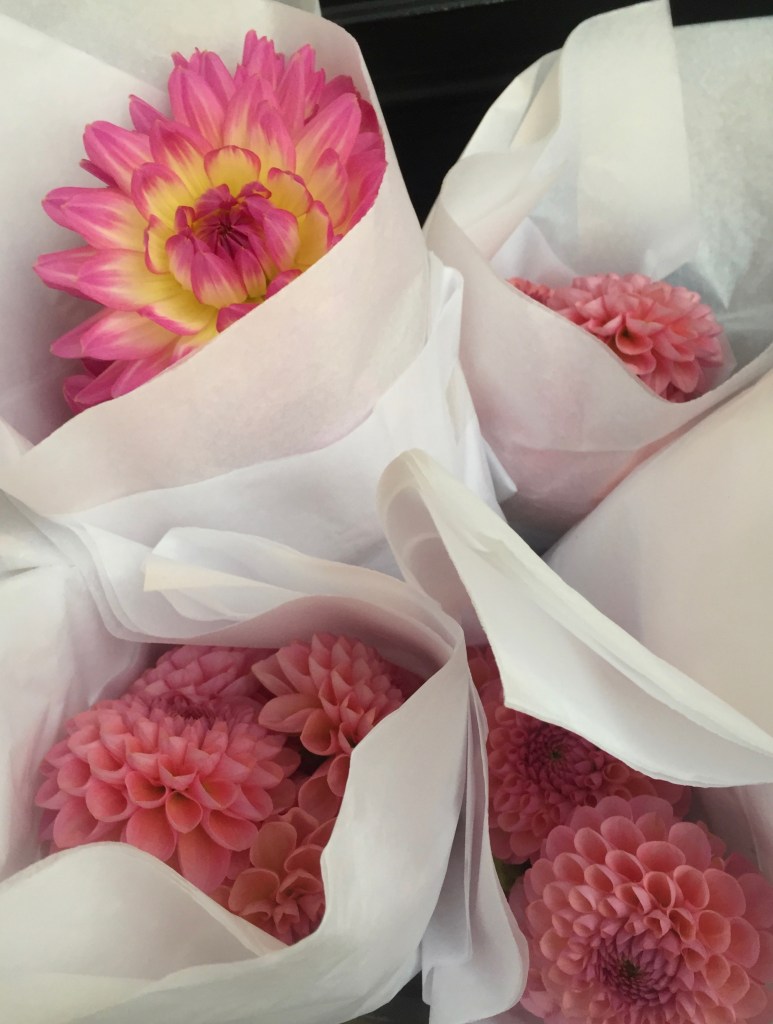 Exquisitely wrapped English dahlias, General Store, Peckham
Naturally, for the 21st birthday party of our twin sons at the beginning of this month, dahlias were the obvious cheerful choice:
 Party preparation – rainbow candles, bunting and dahlias
 21st birthday party – with dahlias – photo by Freddie Reed
 21st birthday party – with dahlias – photo by Freddie Reed
But back to Parham where fifty glorious dahlias have been trialled this summer alongside swathes of gladiolus and a huge patchwork square of zinnias.

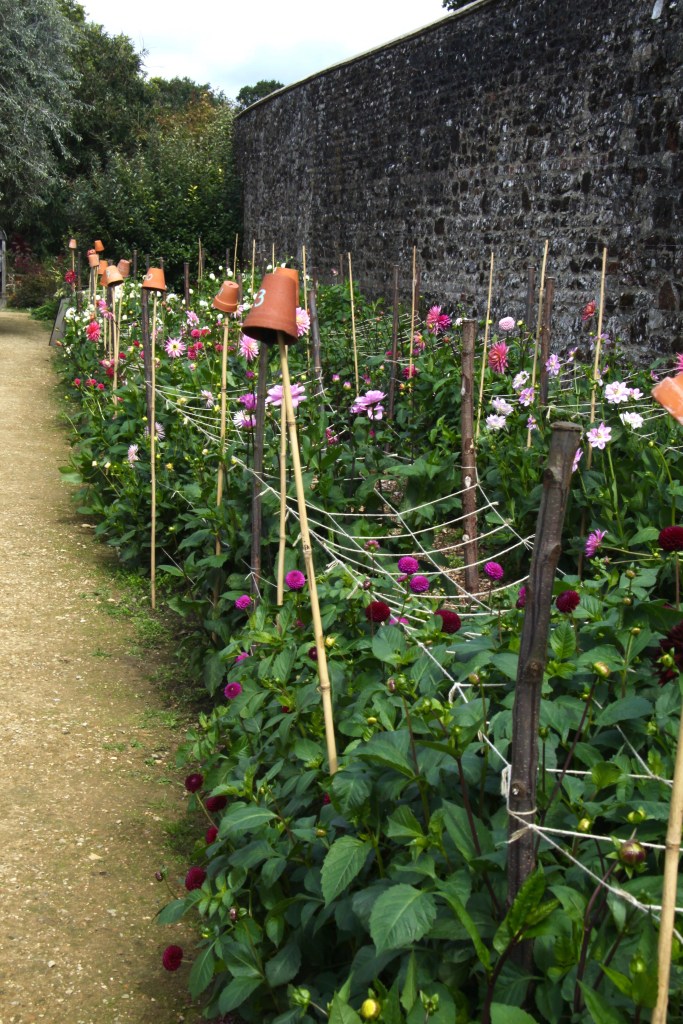 The 2017 dahlia trials at Parham, West Sussex
This is the third year of plant trials in the garden. They began as an ingenious solution to the question: how do you get rid of an infestation of bind weed in a tired border and simultaneously offer something for the visitor to look at? As an experiment, Tom Brown asked his team to see if they could come up with 100 varieties of sunflower. The team cleared the bed and covered the ground with plastic membrane to smother the regrowth, but at the same time planted the sunflower seeds through small holes in the plastic. The result was a fantastic display and of course the chance to really get to know and compare the sunflowers so that future selections could be based on their own close observation and not just the persuasive description in a seed catalogue. This is gold dust research – for the record, favourites include ‘Alchemy’ , the creamy white ‘Vanilla Ice’ and ‘Munchkin’.

The ‘Munchkin’ sunflower has been a particular favourite of the Parham ‘flower ladies’ who use cut flowers from the garden throughout the spring and summer to create displays for the house. They like the smaller scale of the flower heads and its branching habit is helpful when creating relaxed arrangements. As we pass a particularly exuberant ‘Munchkin’ plant, Tom admits that he is unable to explain what happened to the supposedly ‘dwarf’ characteristic on this one:
 An inexplicably tall ‘Munchkin’ sunflower
In 2016 there was an equally seductive allium trial and for 2017 Tom enlisted the help of dahlia expert Richard Ramsey (of nearby specialist dahlia nursery Withypitts ) to come up with a list of fifty favourite dahlias for the Parham gardeners and visitors alike to get to know better. The dahlias are arranged in long rows, supported with a grid of string, and have been picked continuously so that their vase performance can be tested too.

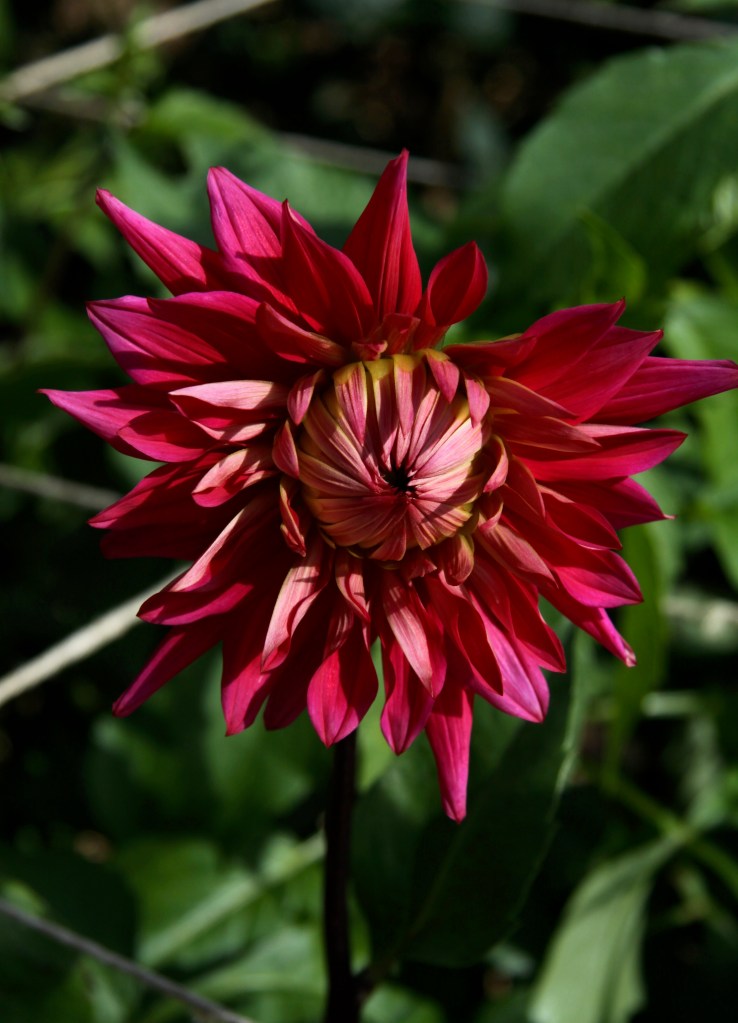 The sumptuous pink Dahlia ‘Prefet Demange’, Parham dahlia trials
Each of the six Parham gardeners has had their say in the ultimate list of top ten favourites and some tubers will be immediately reordered for use around the garden next year.
The perky orange and yellow ‘Charlie Dimmock’ has made the top ten and will be used in the about-to-be-revamped Gold Border. Again the flower ladies liked its lightly spreading, smaller flowered form when left to its own devices. To get a larger flower on a long straight stem, the trick with a dahlia is to remove the two side buds and leave the terminal bud to develop into a champion flower.
 Dahlia ‘Charlie Dimmock’ – a long stemmed champion flower
 Dahlia Charlie Dimmock – left to grow as more relaxed sprays
The substantial semi-cactus Dahlia ‘Black Jack’ has also confirmed its place as an absolute favourite (I particularly love the energy of ‘Black Jack’ as a just opening bud).

 Dahlia ‘Black Jack’ – open and in bud
And Dahlia ‘Small World’ – a free flowering crisp white pompom dahlia did not in fact get to the Top Ten (it was pipped tot the post by ‘Snowflake’ but has been selected by one of the gardeners, Reese, to be used next year as a sort of small mounding shrub at the front of the White Border.

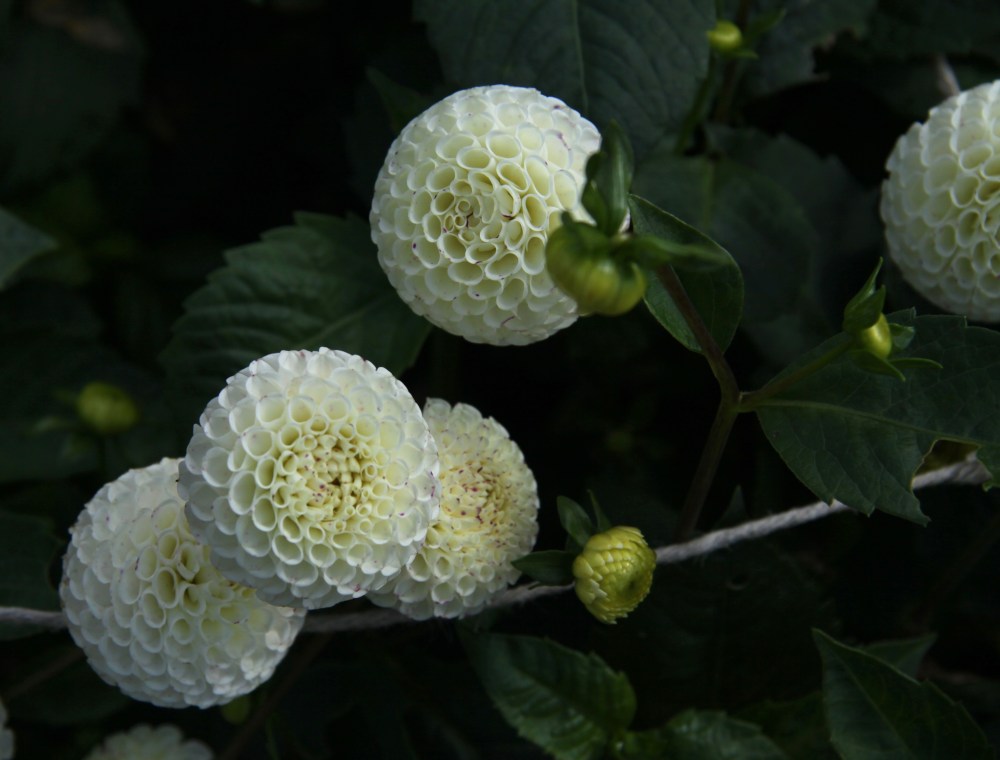 Dahlia ‘Small World’
There is a gorgeous, waxy salmon pink dahlia ‘Aljo’ which also made the top ten.

Dahlia ‘Aljo’
And two of my favourites which are looking particularly good on the day I visit (not such a reliable approach, clearly) are featured below: The cheerful, ‘Dutch Carnival with its super neat circles of red and yellow petals and the delicate, almost transparent ‘Brother Josh’.
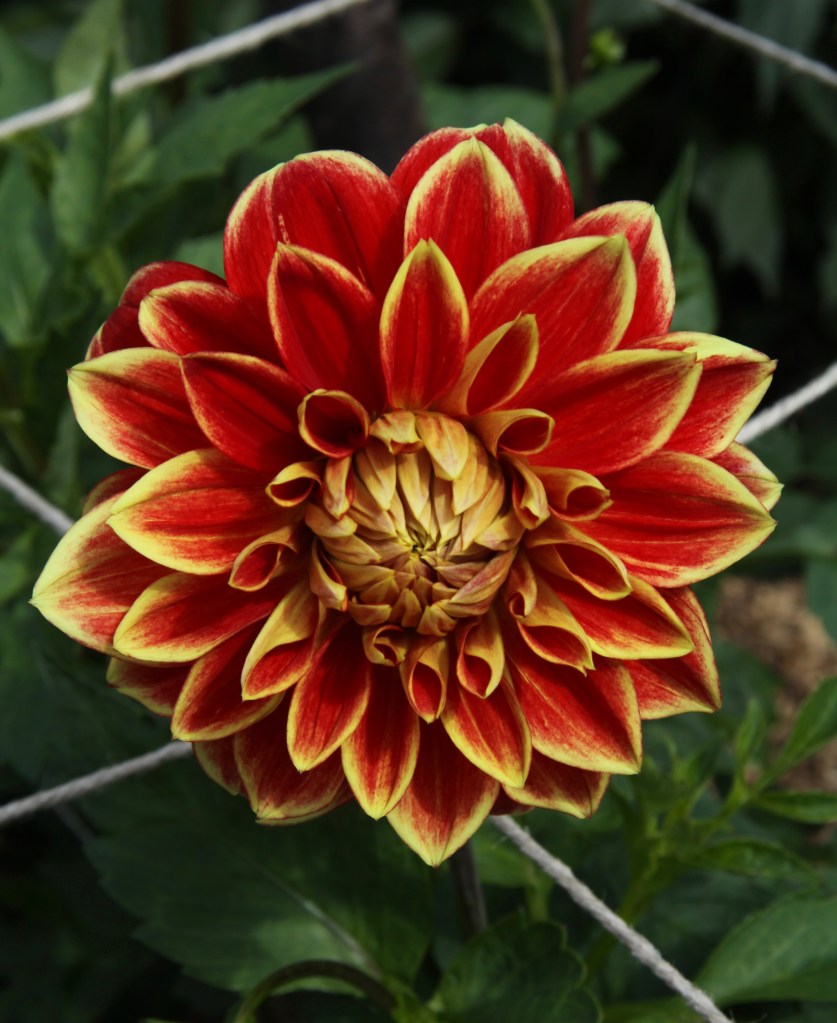
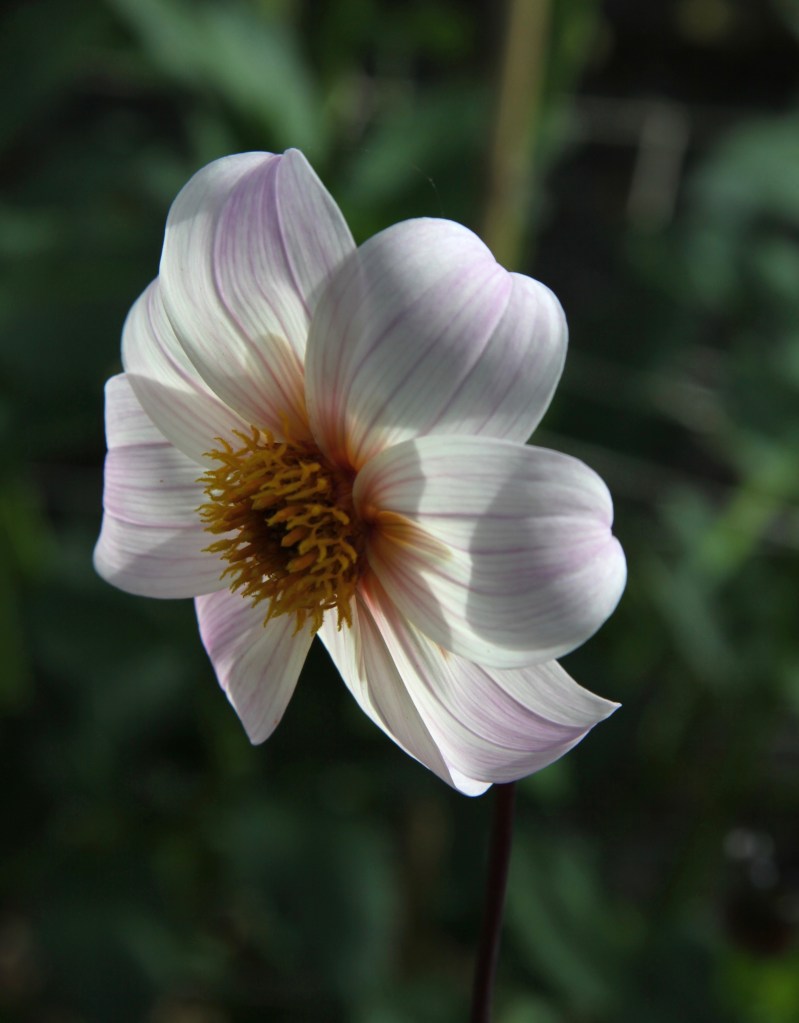
Dahlia ‘Dutch Carnival’ (above) and ‘Brother Josh’ (below)
The trial bed is buzzing midweek in September with visitors examining and selecting their own preferred blooms. The next stage, of course – if you are not growing dahlias on their own as cut flowers – is to work out how to combine them in the border.
Dahlias are always used with exhilarating panache at Great Dixter . Visitors to the Autumn Plant Fair will be able to catch the late autumn garden there in full swing.
I love the sugar pink Dahlia ‘Hillcrest Candy’ here soaring to the sky with a backdrop of arching miscanthus.
 Dahlia ‘Hillcrest Candy’, Great Dixter
In the Barn Garden, the fiery red Dahlia ‘Wittermans superba’ is used with brilliant simplicity against a plain green foil of a fan trained fig. 
Dahlia ‘Witterman’s Superba’ against the magnificent fan trained fig, Barn Garden, Great Dixter
And here a deep pink dahlia – possibly ‘Hillcrest Royal’ – is a rich accent in a celebratory dance of a border with spiky cardoons, the burnt orange Helenium ‘Sahin’s Early Flowerer’ and the crazily tall Persicaria orientalist – kiss-me-over-the-garden-gate.

Dahlia ‘Hillcrest Royal’ adds a deep accent to a border, Great Dixter
One of my favourite Great Dixter combinations is Dahlia ‘Mexican Black’ – a single flowered dahlia which is actually a cross with the chocolate scented Cosmos atrosanguineus – used as a covetable bobbing partner for the rhythmic, deep purple Salvia ‘Amistad’.
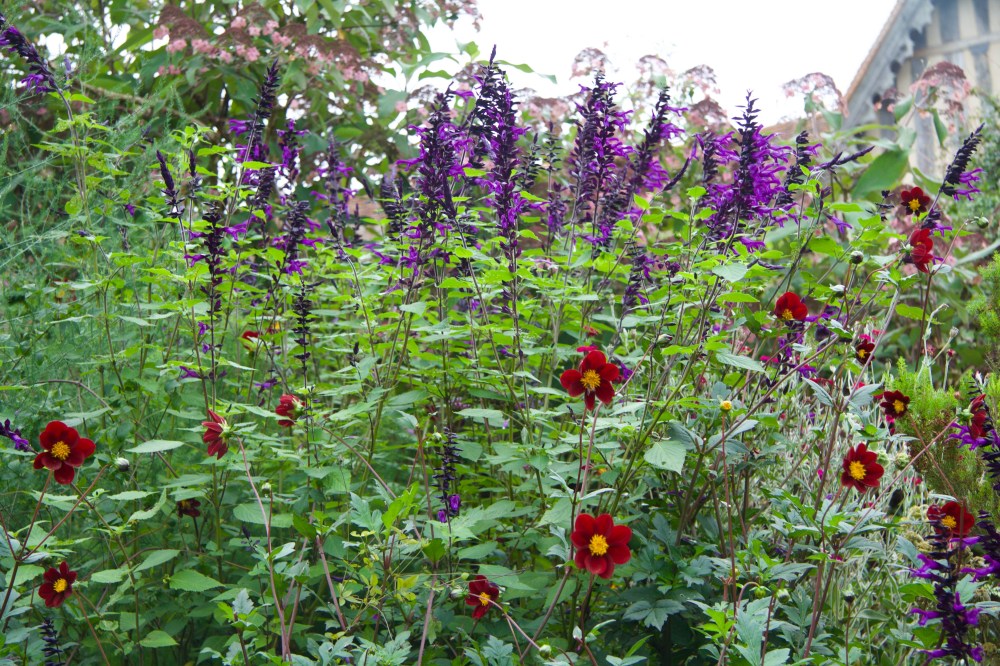

Dahlia ‘Mexican Black’ with Salvia ‘Amistad’
I cannot leave Parham, of course, without endless other aspects of the garden catching my eye.
The Entrance Border is looking spectacularly bruised and moody.

Entrance Border, Parham
I am smitten by Dicentra scandens – a pale yellow, climbing bleeding heart I have not met before that lightly clambers over and through the bed which Tom assures me can be grown as an annual if planted in June.
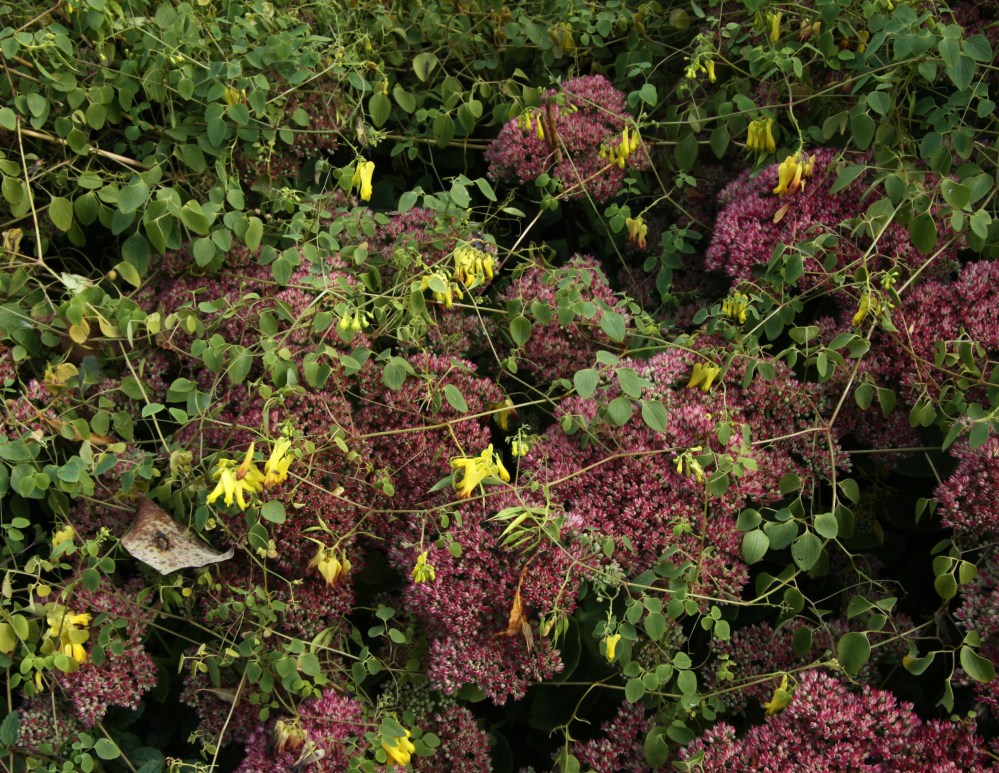

Dicentra scandens clambering over sedum in the Entrance Border, Parham
I like the subtle combination of both pale pink and coral pink persicaria with feathery calamagrostis:
Persicaria amplixicaulis ‘Rosea’ and ‘Firetail’ with feathery calamagrostis, Entrance Border, Parham
There is a slightly more silvery version of this palette in the Prairie Border. I love the use of pale yellow Bidens heterophylla to lighten the mood and the way the silky tassels of miscanthus and the dull pink of Eupatoreum work so well with the mottled brick of the wall behind them.


 The Prairie Border, Parham with pale yellow widens lighting up the border
There are simple, strong effects such as this stand of white Japanese anemone against an open garden gate

Japanese anemone against garden gate, Parham
And the zinnia trials introduce me to the delicious antique looking ‘Queen Red Lime’ (which did indeed make the Parham 2017 top ten):

Zinnia elegans ‘Queen Red Lime’
Of the many exciting projects at Parham, I am particularly intrigued by a new planting of lilac and Iris sibirica .
 New planting of Syringa vulgaris ‘Katherine Havemeyer’ and Iris sibirica
Landscape designer, Todd Longstaffe-Gowan comes to Parham a couple of times a year to act as an advisor and sounding board. A plan was developed to do away with a tired looking lavender cross and fill the space with romantic and traditional lilac shrubs emerging from pools of slender Iris sibirica. The gorgeous ‘Katherine Havemeyer’ was selected for the lilac: Ashridge Trees describes it as is a scented, double flowered lilac with ‘an elusive colour that ranges from lavender pink to mauvey blue depending on the time of day and the intensity of the light’.
 Syringa vulgaris ‘Katherine Havemeyer’
100 each of 12 different cultivars of Iris sibirica were planted, as a sort of fast track on-the-job trial. ln fact Iris sibirica ‘Silver edge’ is already outstripping its neighbours as ‘by far the best blue’. This part of the garden is looking young and quiet at the moment and Tom and his team are making sure that the iris are given a couple of years of pampering, removing any competing grass and mulching generously to get them established. I can imagine a visit in late May in a year or two’s time when the groups of iris with their fine mauve-blue flowers and slim sword shaped leaves form a wonderful graceful understory to the clouds of lilac in full flower.
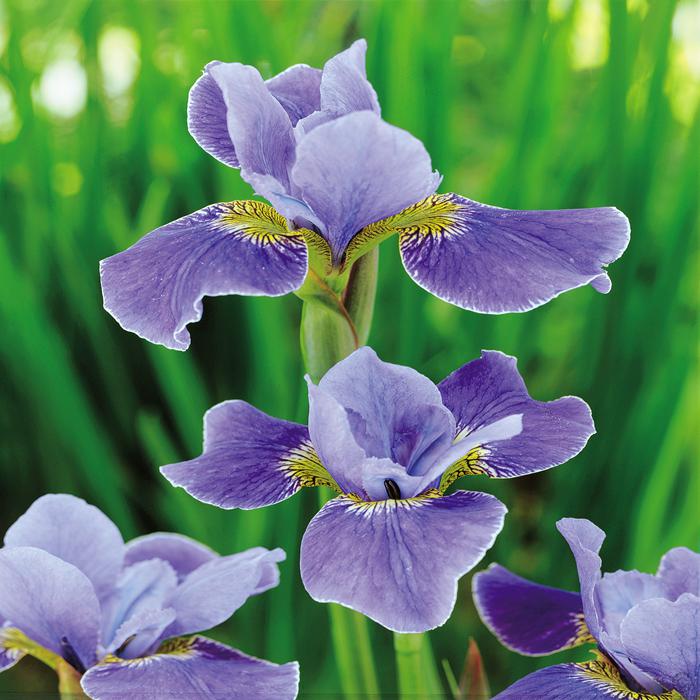
Iris sibirica ‘Katherine Havemeyer’
A quick peak into one of the new glasshouses reveals that Tom has, despite his initial modesty, already succeeded in growing some perfect specimens of melon. The glass house is heady with their scent and I feel very stupid not to have known before that melons are supported in string bags.

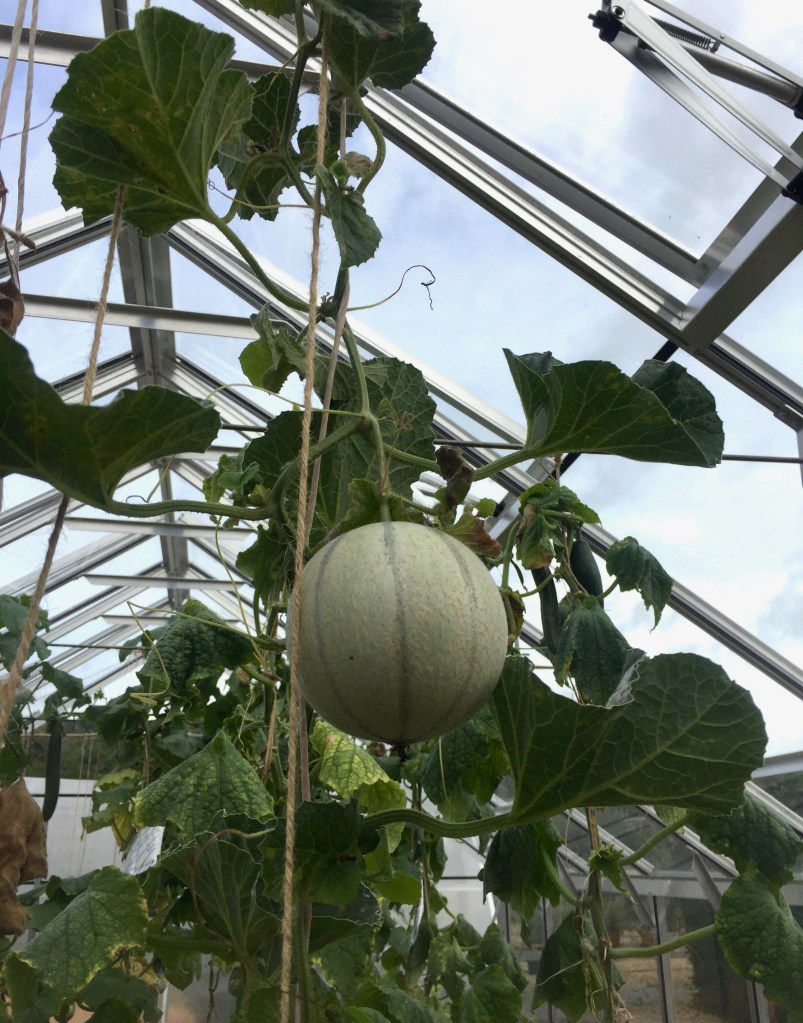
Melons in the glass house at Parham
My contribution is to recommend the passionate Amy Goldman’s book on melons (I have written about Amy Goldman in my post A Gardener’s Letter to Paris ).

As I am leaving Parham a magnificent stone trough catches my eye. Airy rich yellow bidens, scarlet salvia and gorgeous trails of the purple bell vine, Rhodochiton atrosanguineus. The planting is one hundred percent Parham: exuberant, delicate and slightly unexpected. Thank you Tom for another inspiring visit.

Stone trough with widens, salvia and purple bell vine, Parham, West Sussex
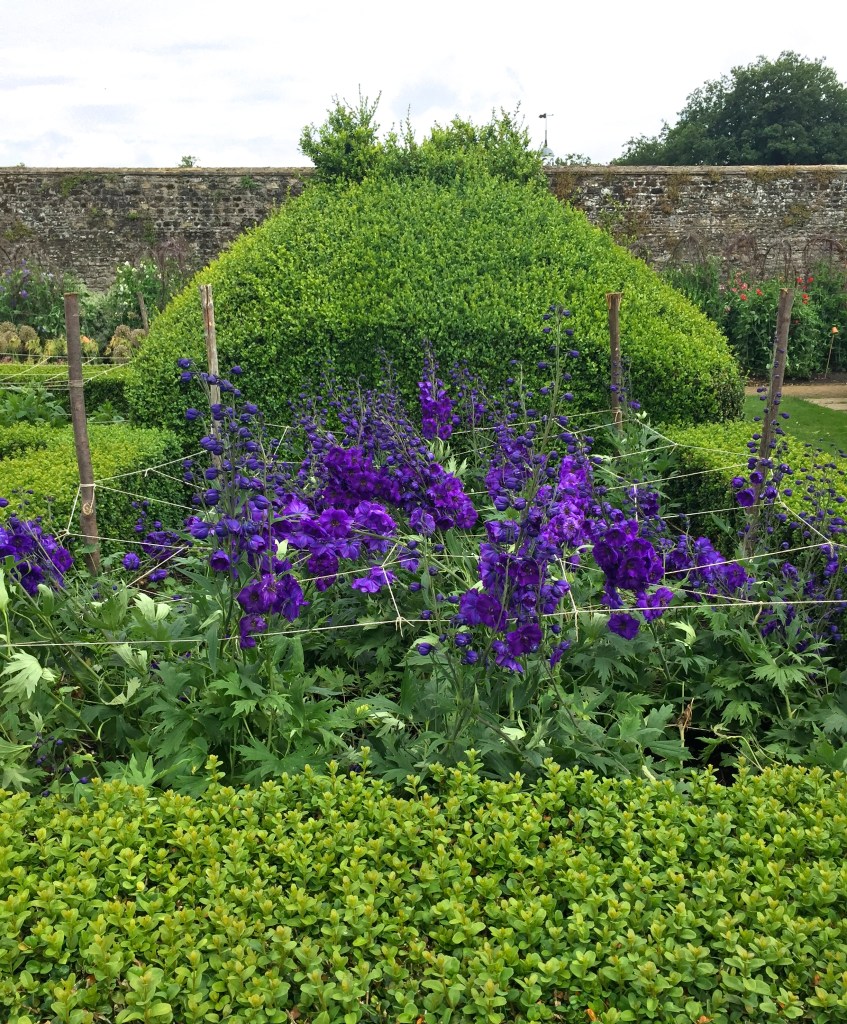 Electric blue delphiniums emerge from the box parterre in The Vegetable Garden, Parham
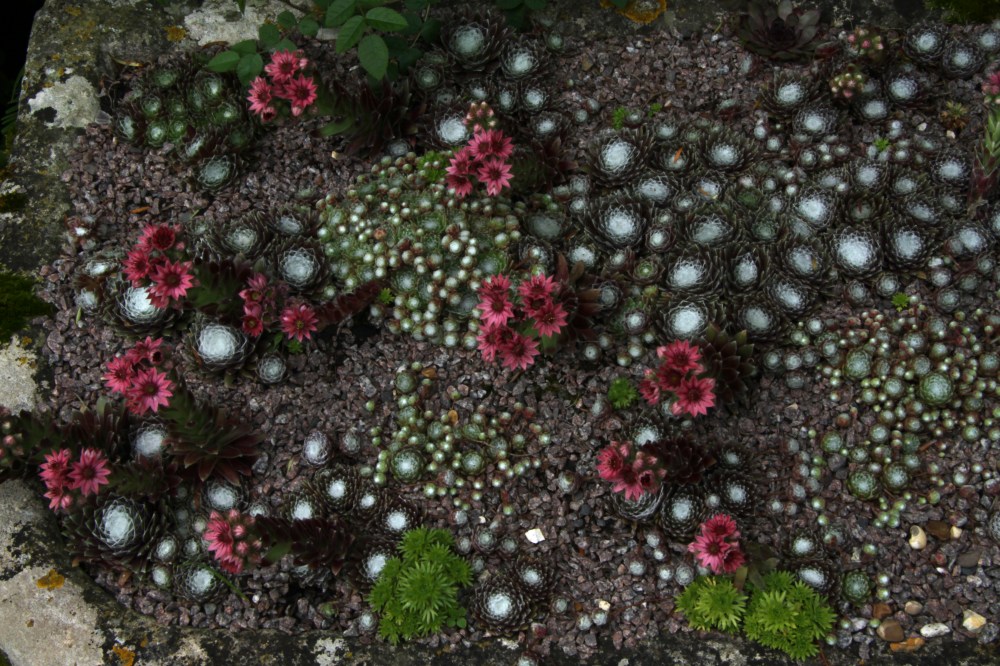 Quietly psychadelic succulents fill a stone trough in The Herb Garden
 Parham House, West Sussex
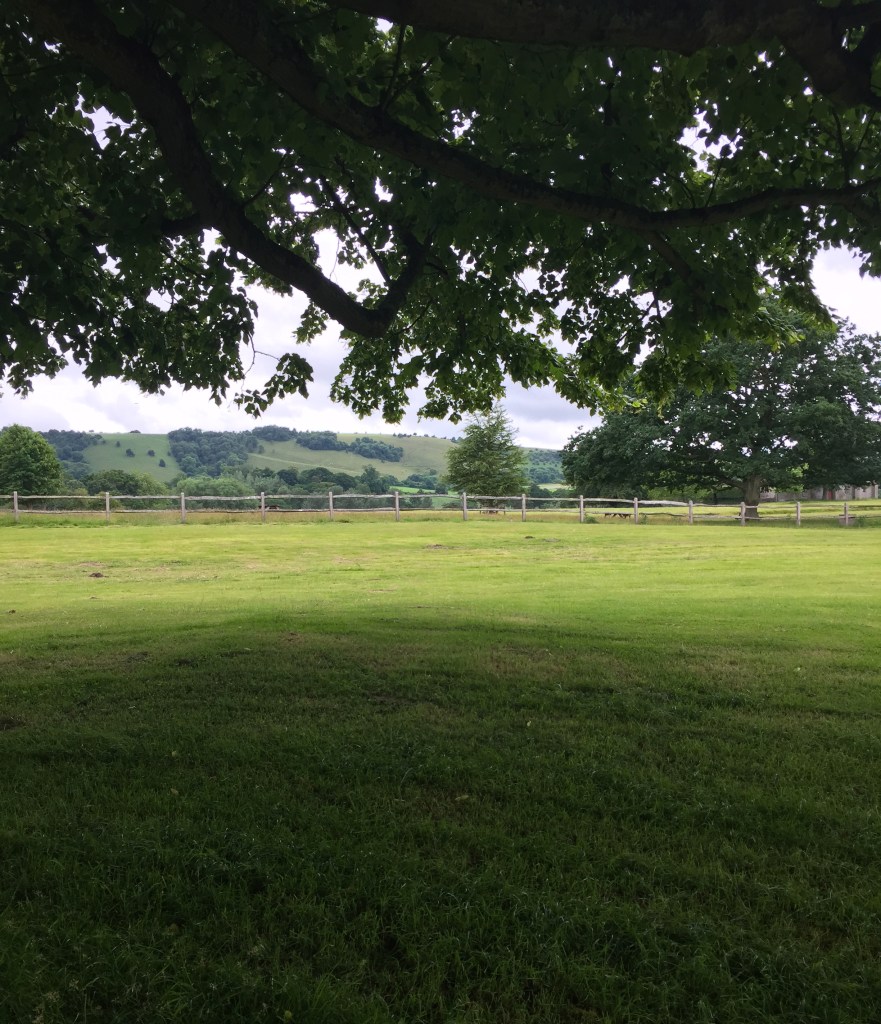 Parkland and views to rolling Sussex countryside, Parham
 A stand of mature oak trees, Parham
 The Clock Tower, entrance courtyard, Parham
 Multi-stemmed box trees lead the way into the garden.
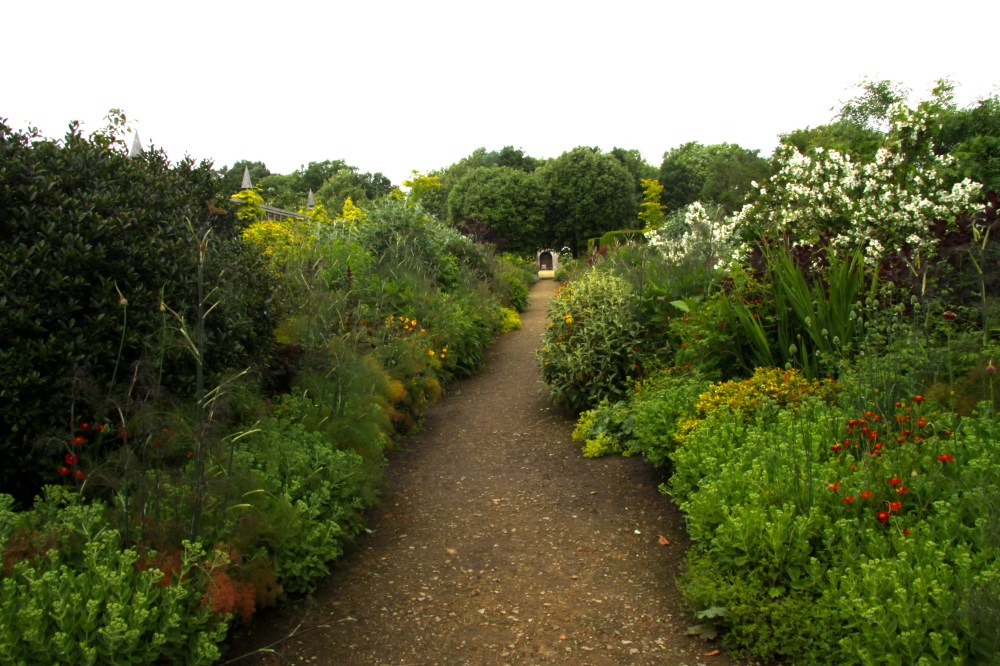 The dusky Entrance Borders, Parham, illuminated with spreading white Philadelphus
 Golden hops, bronze fennel, apricot-yellow day lilies, and yet-to-ripen head of Allium sphaerocephalon, The Entrance Borders, Parham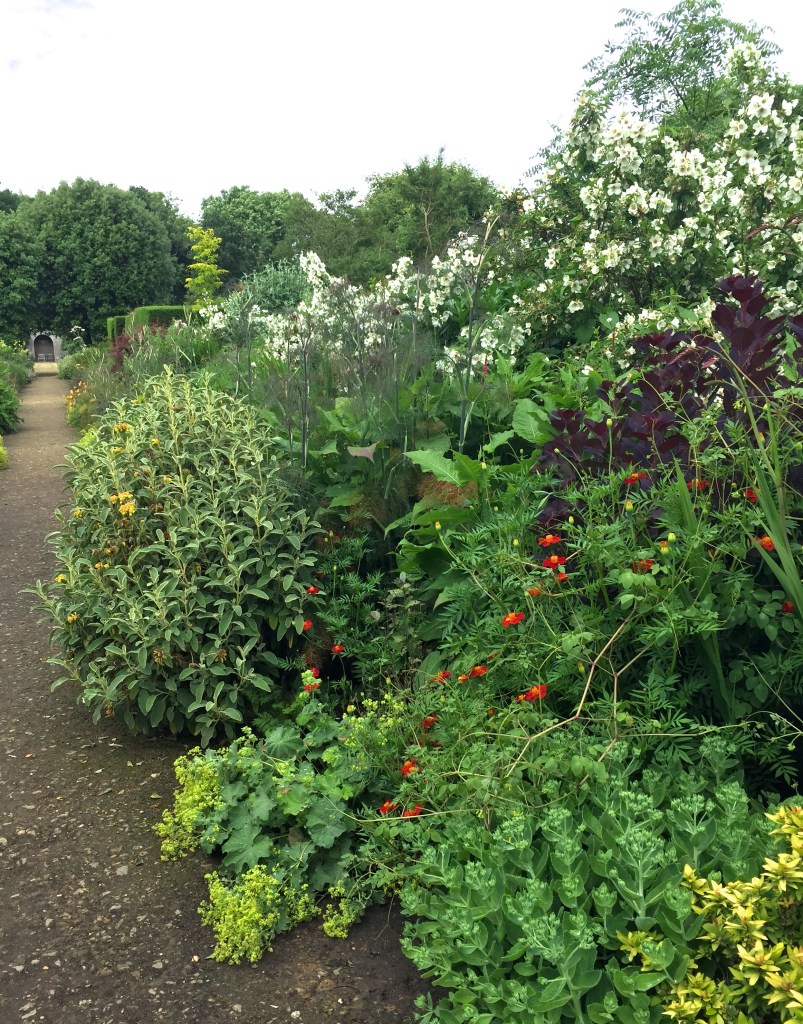


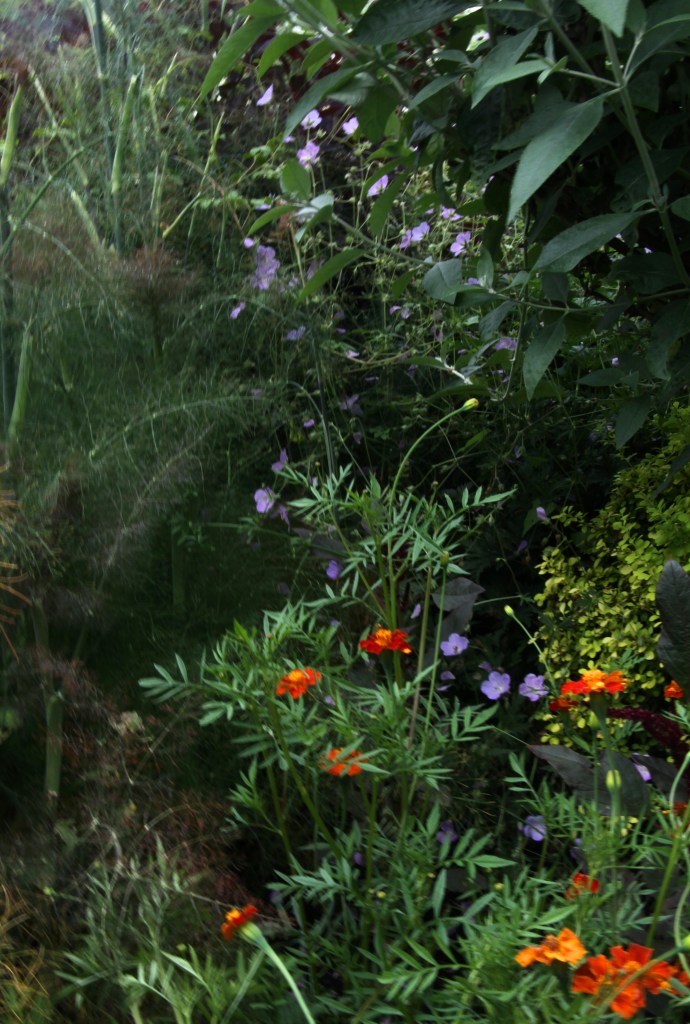 A sombre moment of geranium, bronze fennel and a flash of red marigold
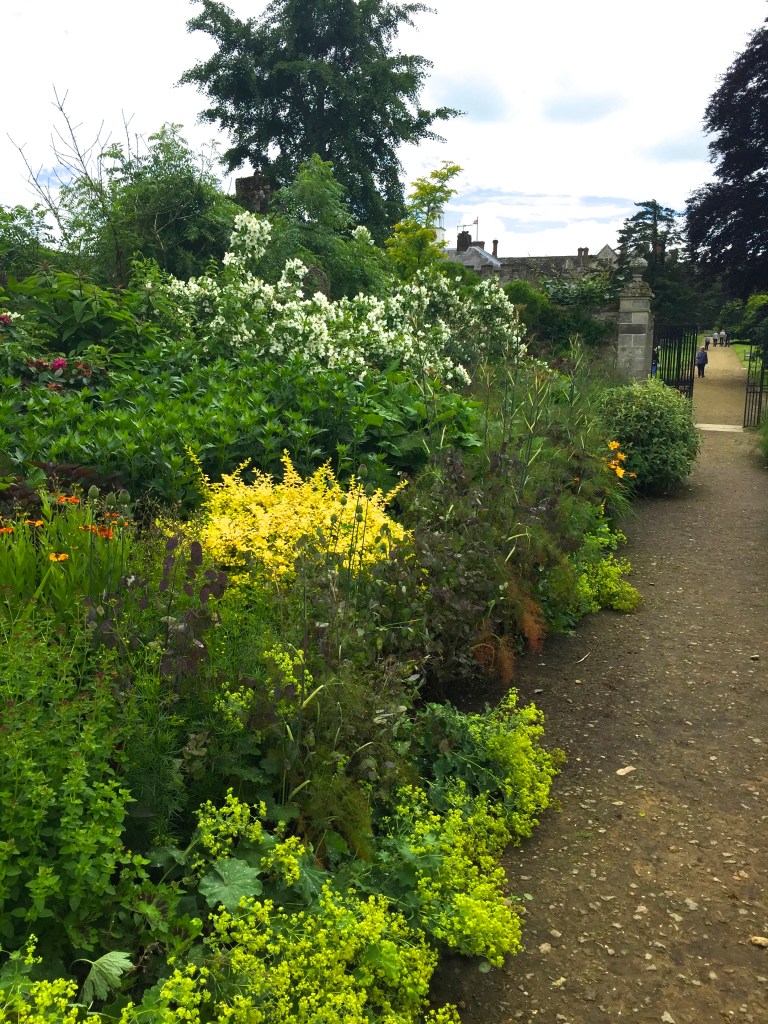 The border is lit up by a pocket of the shrub Berberis thunbergii ‘Aurea’
 Berberis thunbergii ‘Aurea’ , mauve geranium and seed heads of Lunaria annua
 Persicaria amplexicaulis ‘Firetail’ against Cotinus coggygria ‘Royal Purple’
 A balanced, light-catching group of Berberis thunbergii f. atropurpurea, red marigold, orange yellow day lily and Sedum ‘Autumn Joy’
 Golden hops festoons the trellis, with sweet-scented Philadelphus in the foreground
 Softly clothed entrance into The Herb Garden


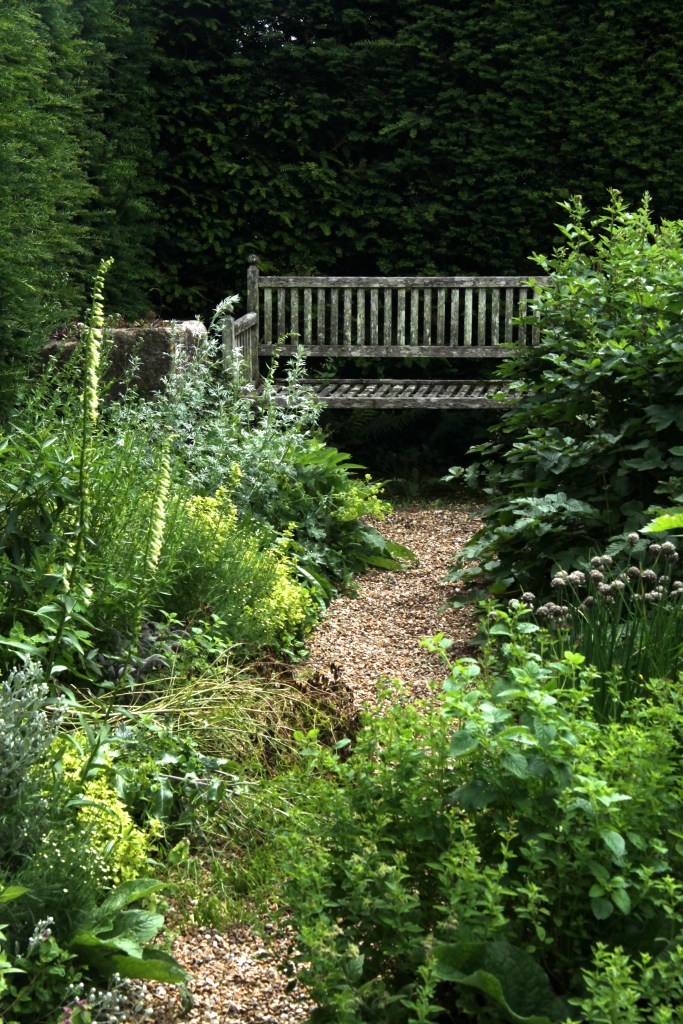 Winding gravel path to a second bench with slender spires of the creamy Digitalis lutea
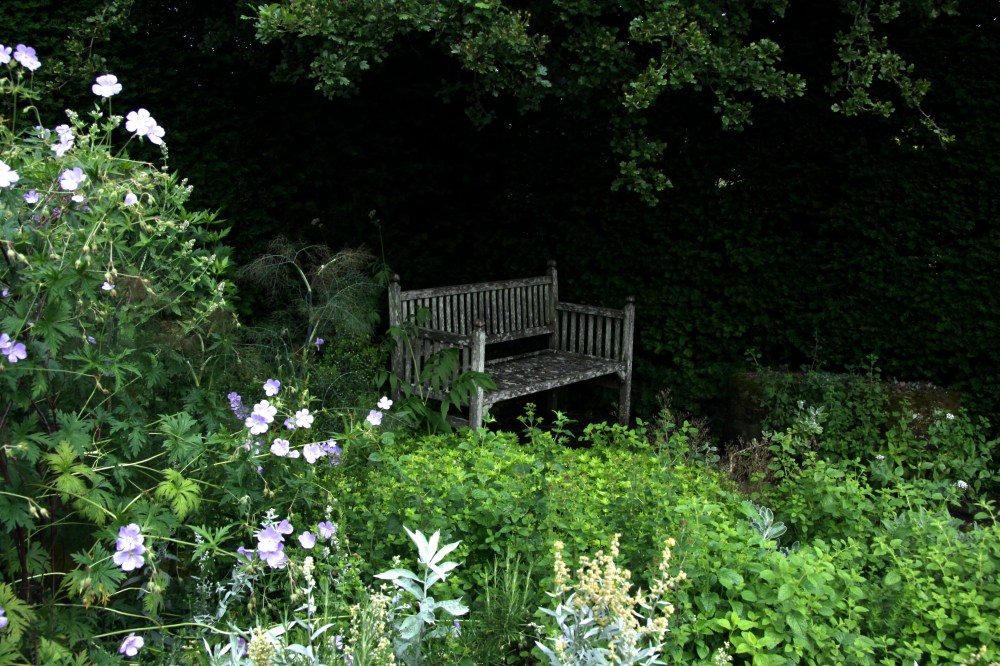 A third bench deep in the shade of an old apple tree
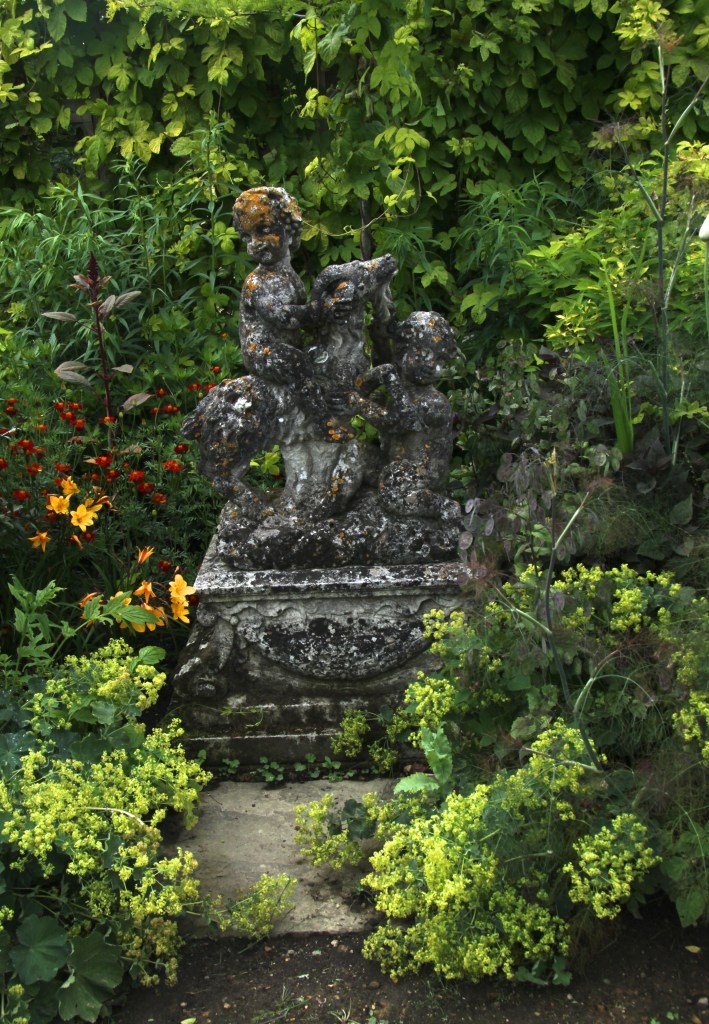

 View as you leave The Herb Garden
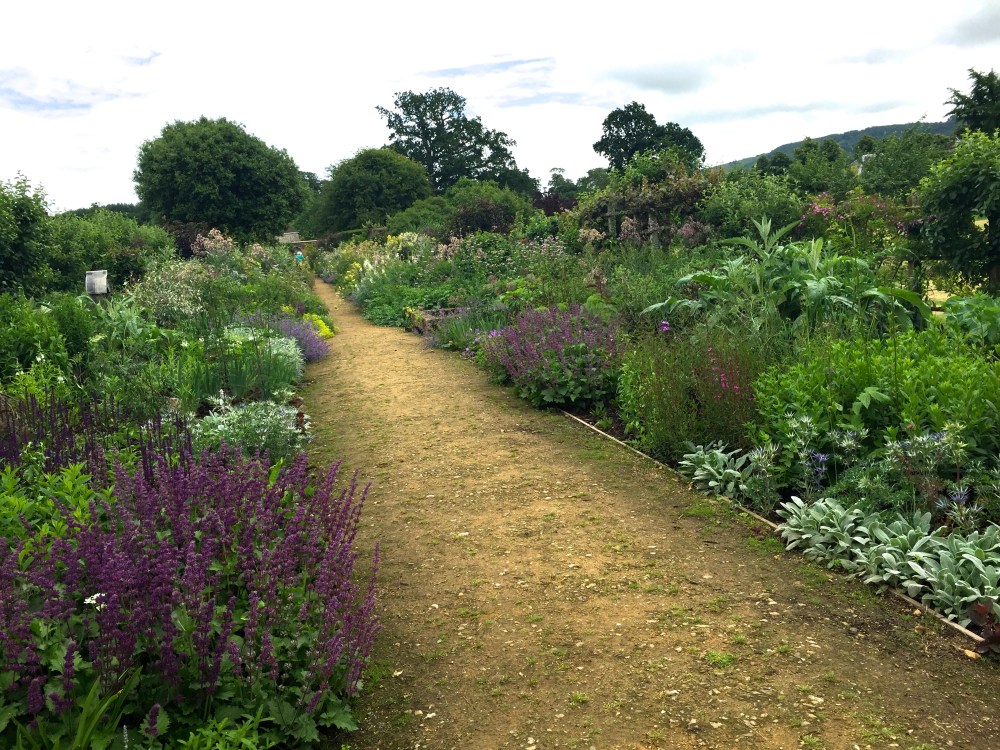 FIrst view of the Blue Border
 Espalier apple trees edge the border
 Art deco style arches act as pause points in the fence – the older lichen-covered arch above is clothed in Vitis vinifera ‘Purpurea’
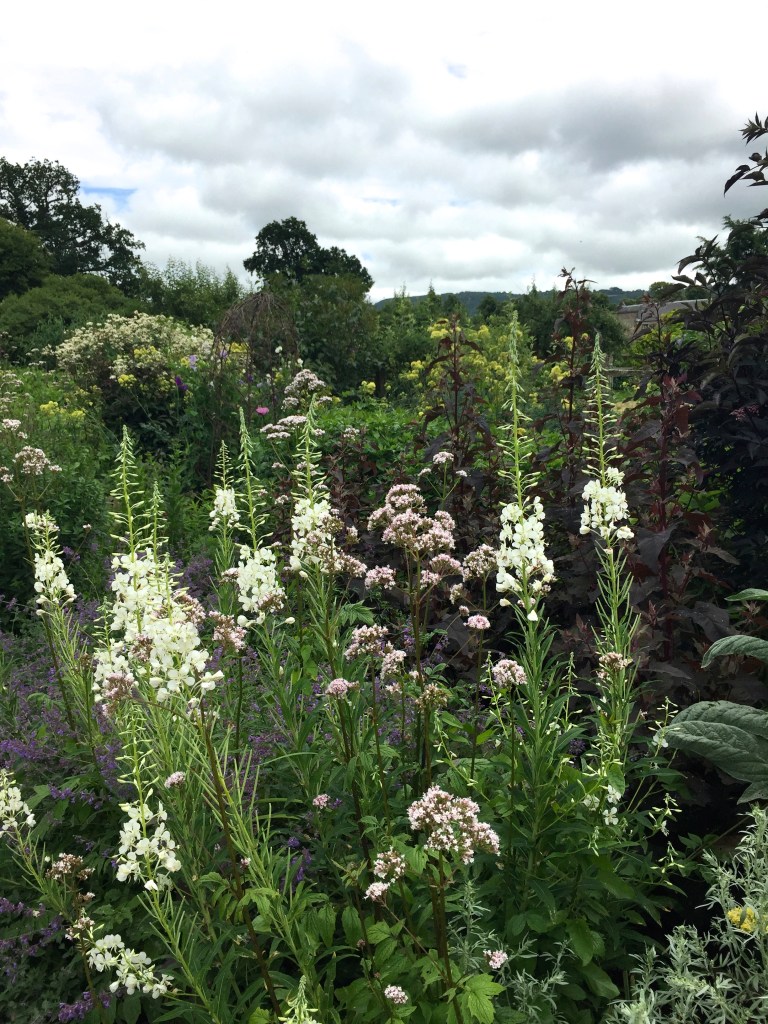 Chamerion angustifolium ‘
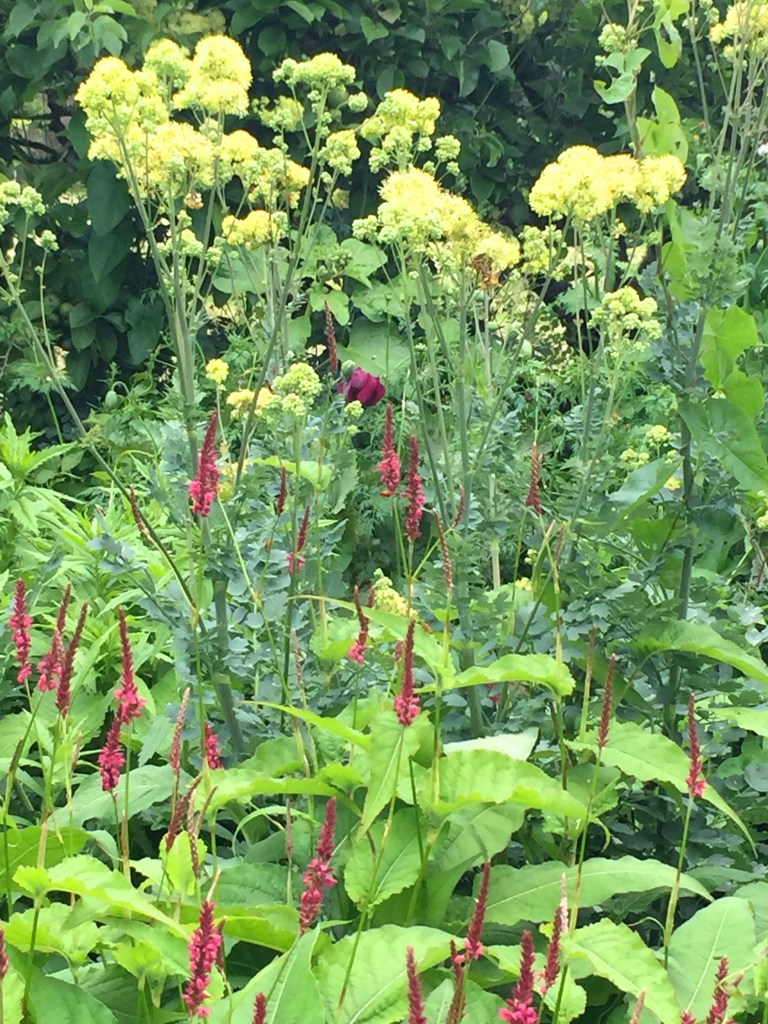 Thalictrum flavum subsp. glaucum and Persicaria ‘Firetail’
 Thalictrum ‘Elin’
 Thalictrum flavum subsp. glaucum, Valeriana pyrenaica, Chamerion angustifolium ‘Album’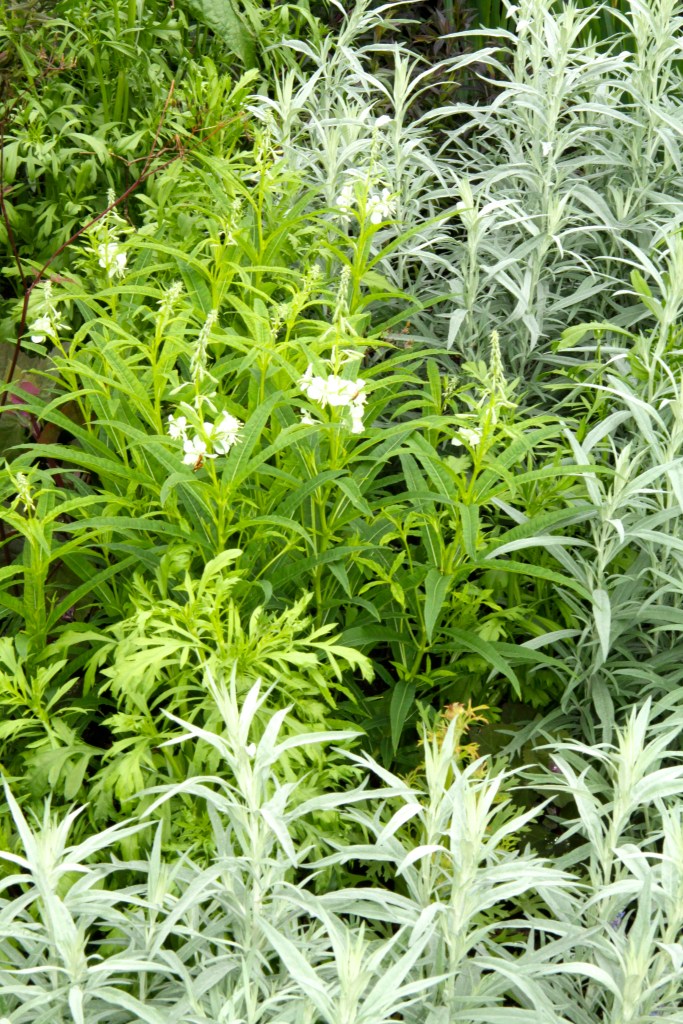
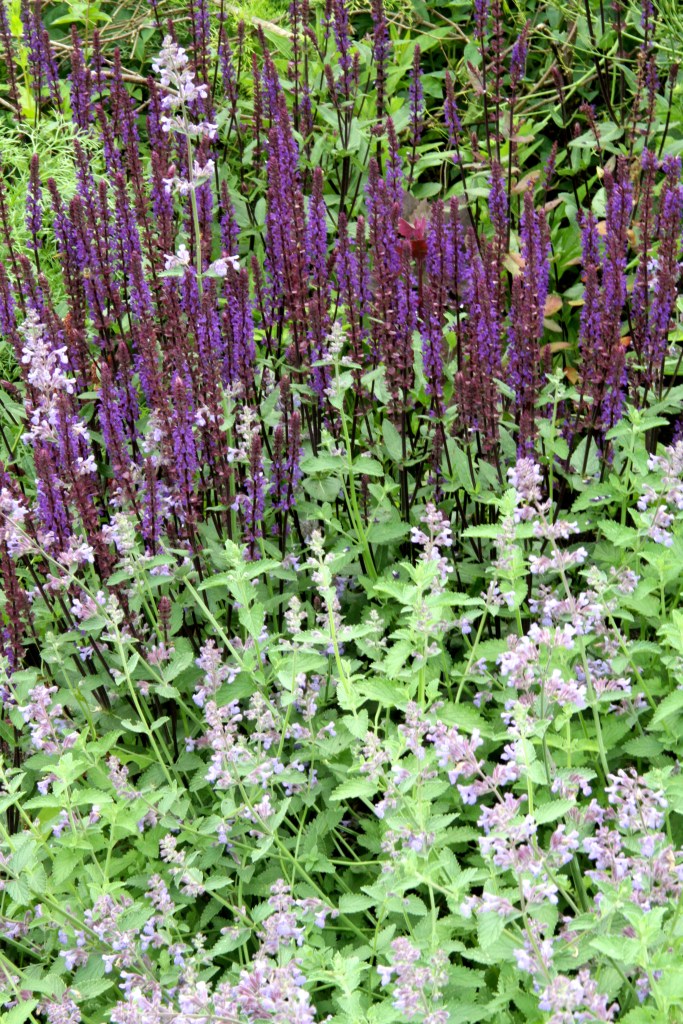
 Mounds of salvia, catmint and blue geranium anchor the border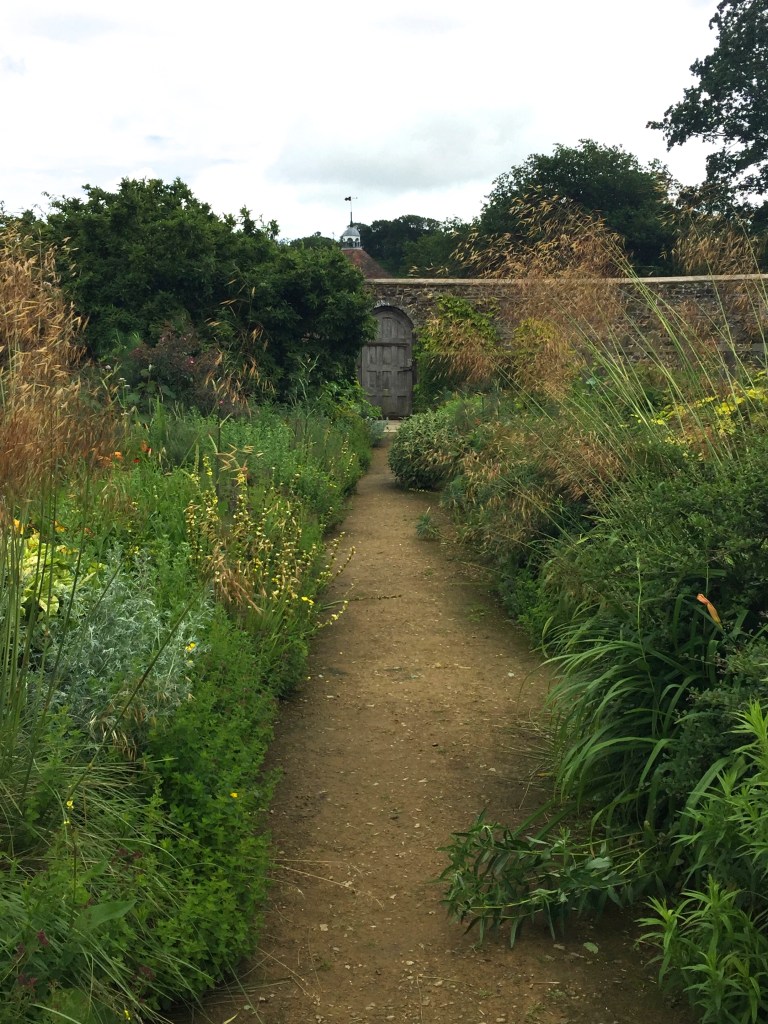
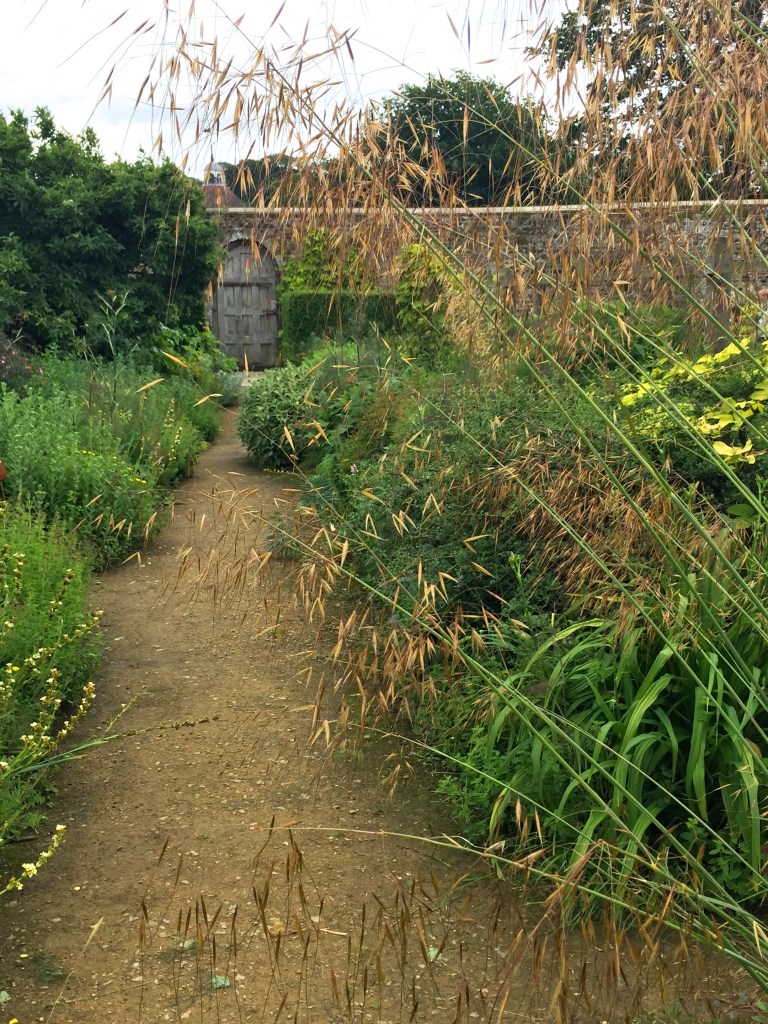
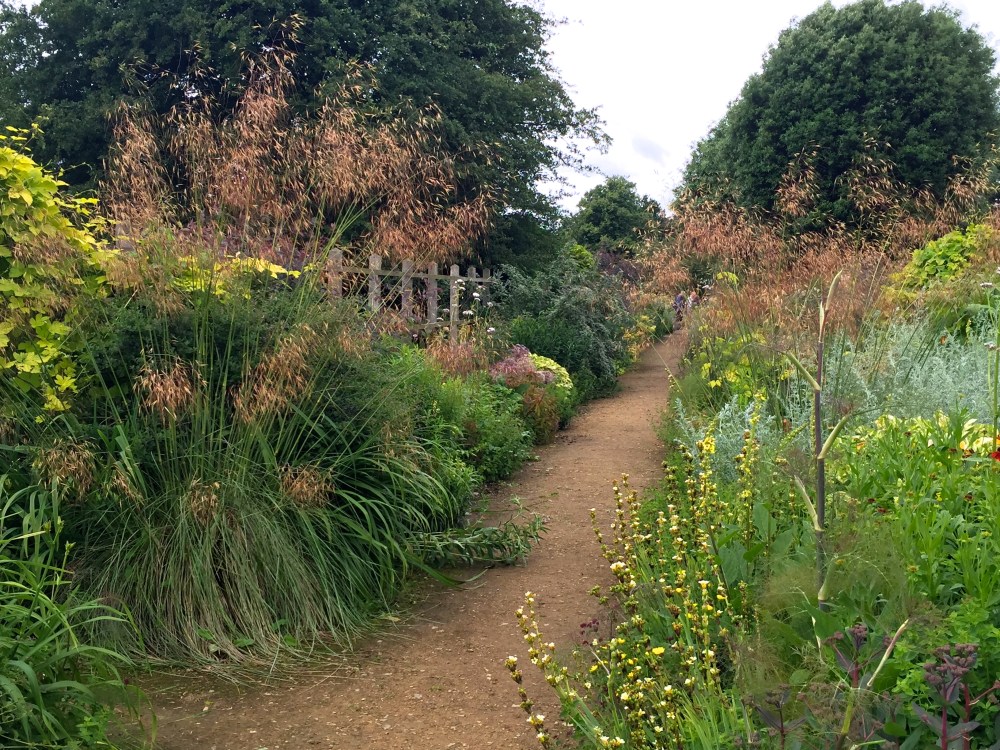 The bronze fireworks of Stipa gigantea are anchored by the swordlike foliage and pale yellow flowers of Sisyrinchium striatum in the Gold Border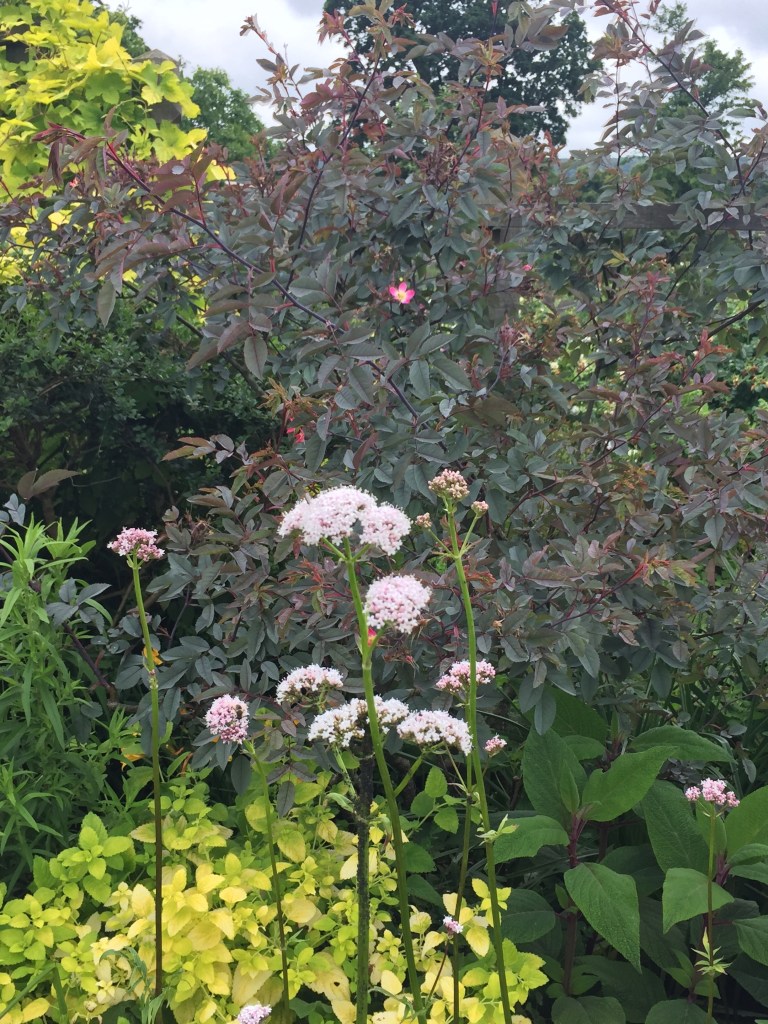

 Sedum ‘Matrona’ with golden hops
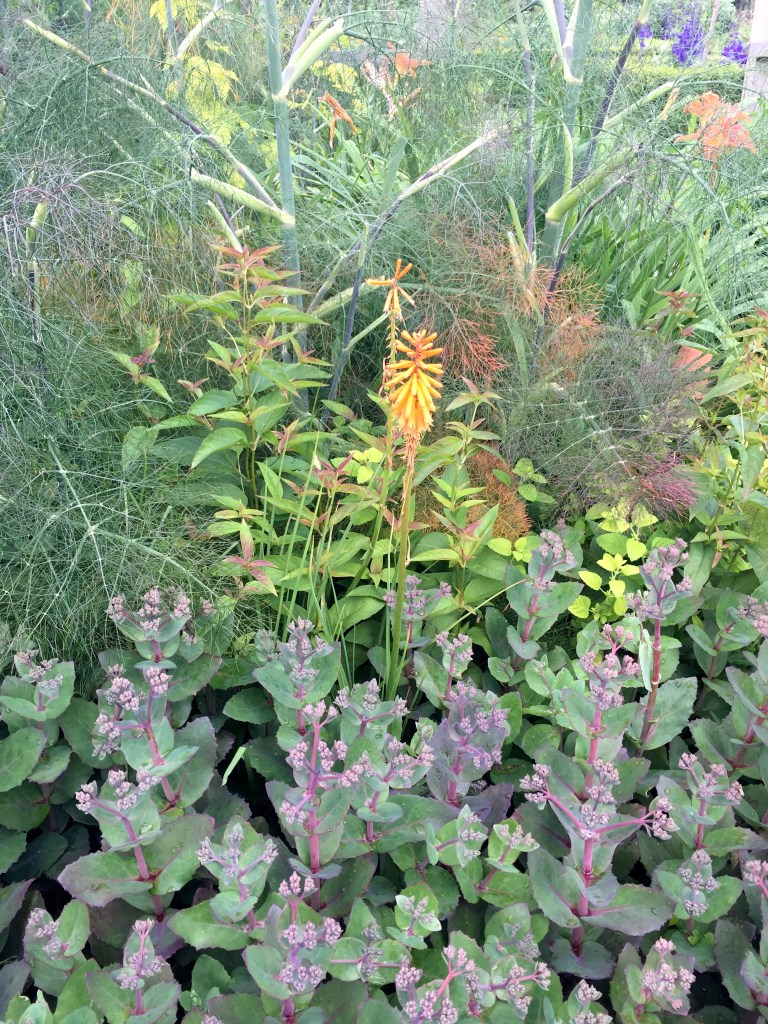 An orange Kniphofia amongst sedum and bronze fennel
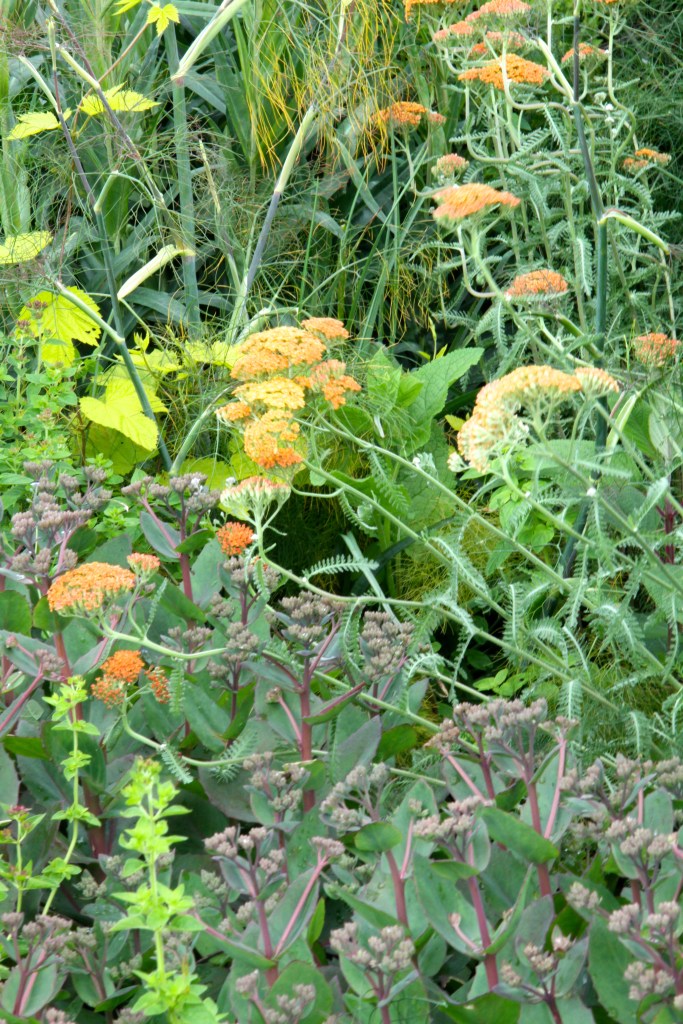 The flat heads of Achillea millefolium ‘Terracotta’ with Sedum ‘Matrona’

 Clipped box, electric blue delphinium, Amni majus, and giant allium in bud
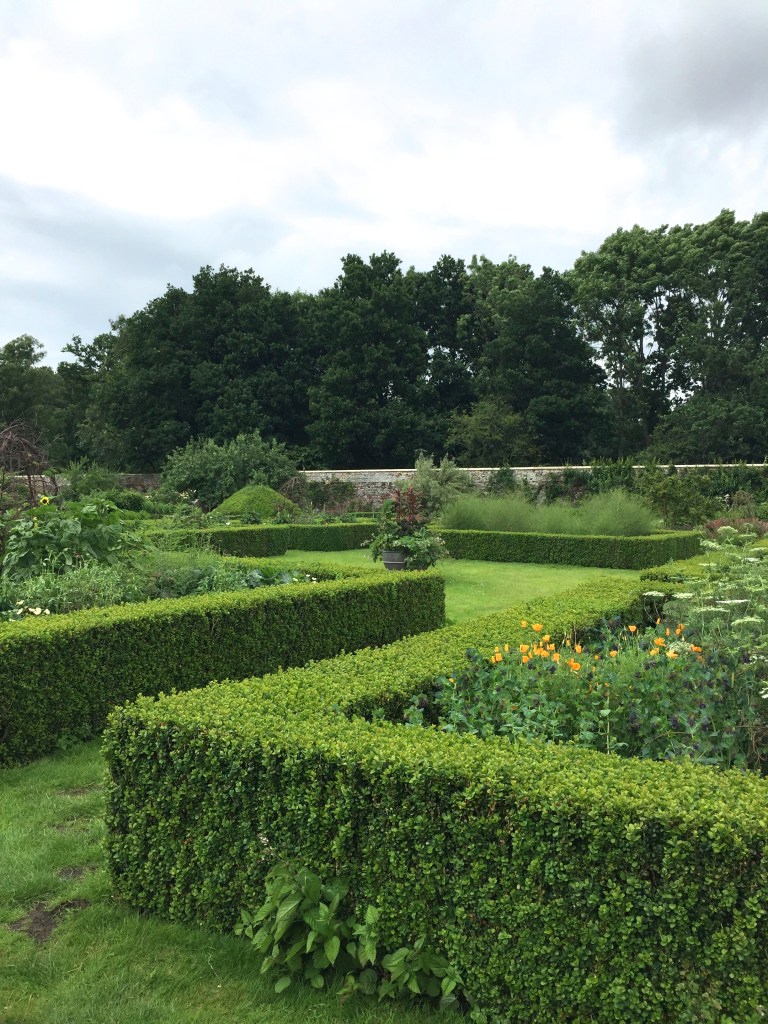 The Vegetable Garden Parterre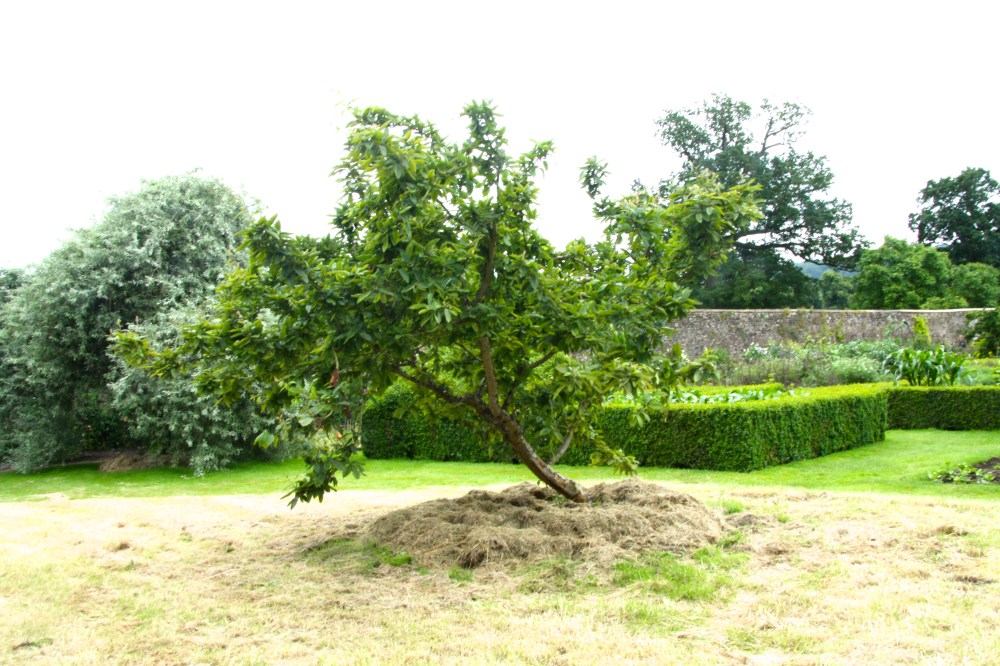

 The 1928 Wendy House
 A not very helpful selfie to show the scale of Wendy House …
 Digitalis lutea

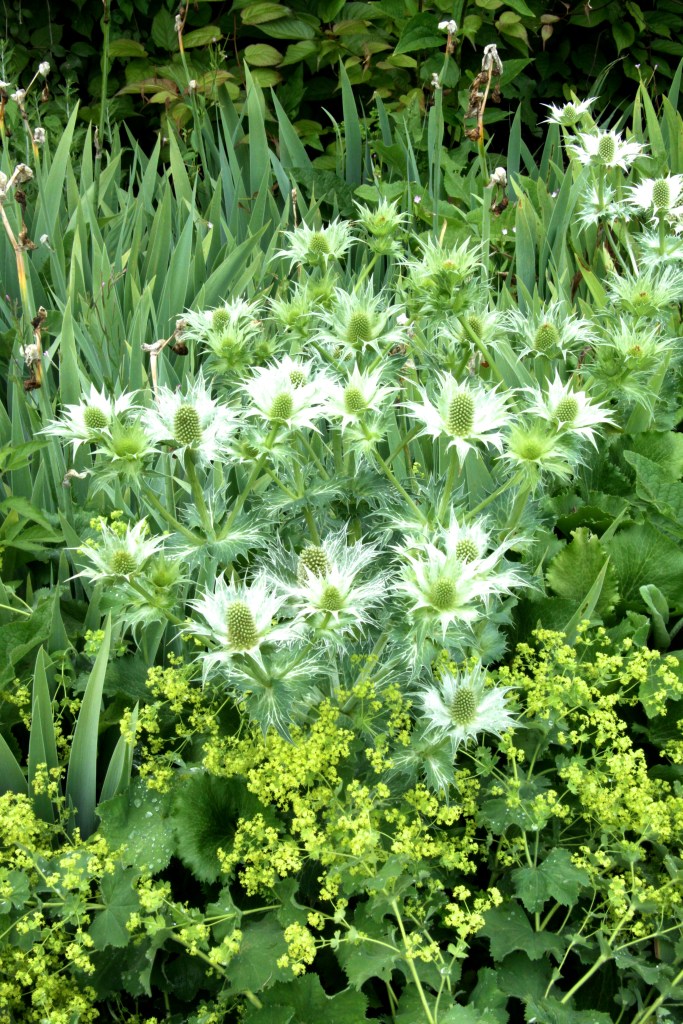 A fine stretch of shady planting – the bottom photo shows the acid green of Alchemilla mollis and the pale silvery green of the young Eryngium giganteum ‘Silver Ghost’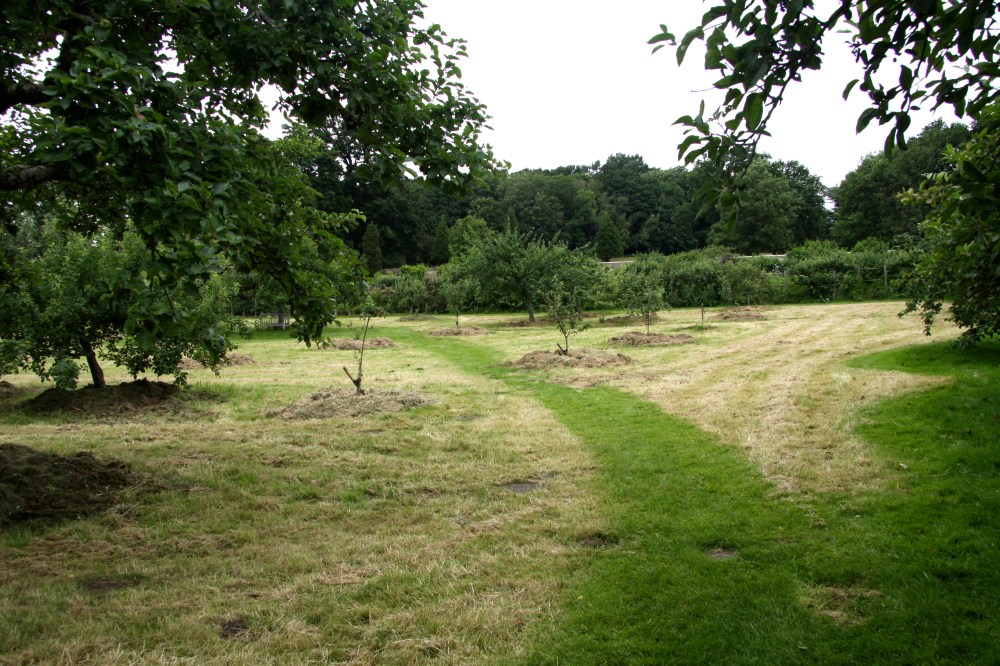
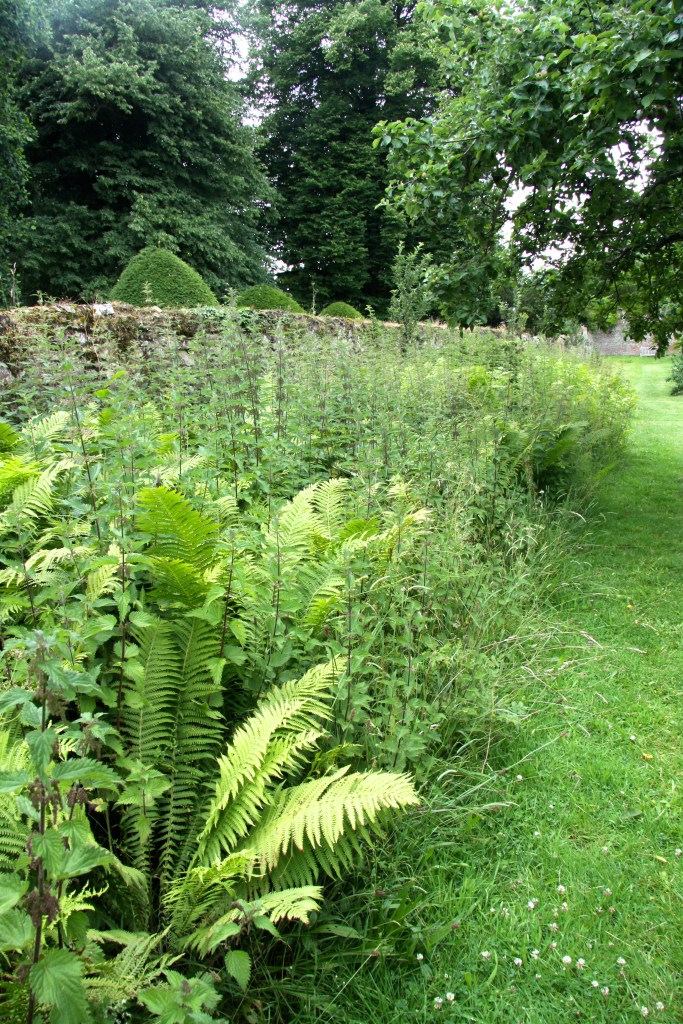 The orchard with a strip of wild-life friendly nettles at its edge
 The lake at Parham
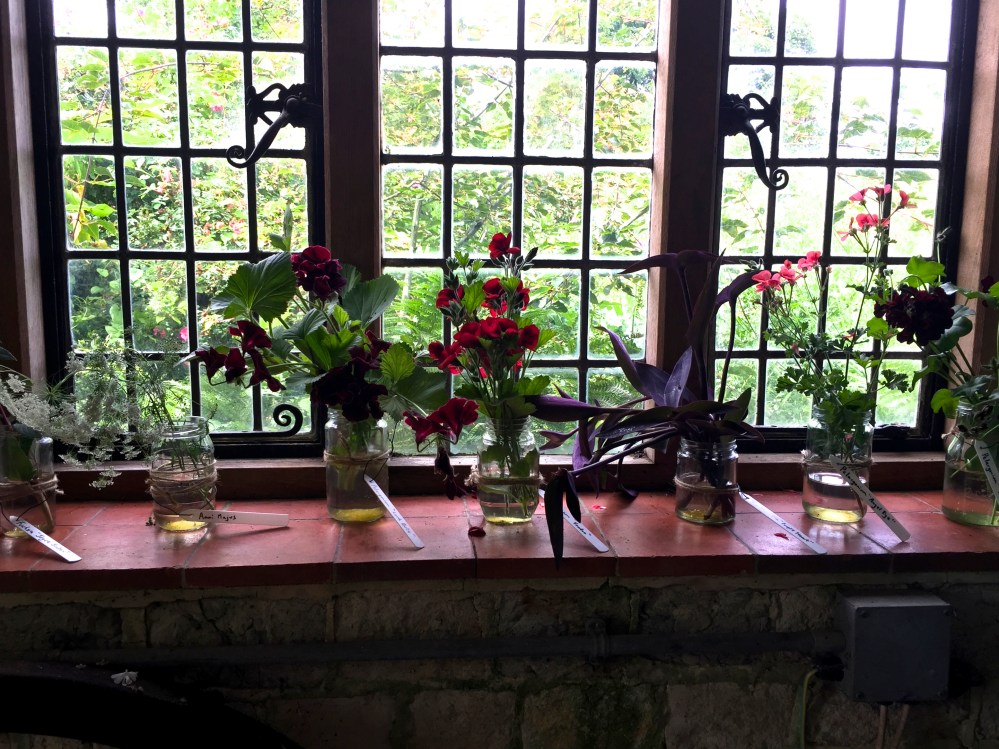
 Pelargoniums in simple glass vases against lead paned windows
 Route through the greenhouses




 The Dahlia Papers